This song is just plain catchy!
Showing posts with label Entertainment. Show all posts
Showing posts with label Entertainment. Show all posts
Tuesday, April 14, 2009

Sunday, March 8, 2009
Lena Park!
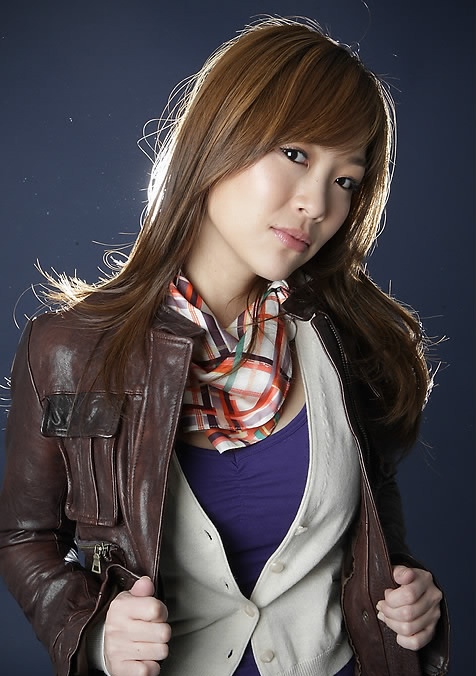
Lena Park has been performing a lot in Korea promoting her new albun, 10 Ways to Say I Love You, lately. I noticed that she has a different hairstyle from her previous albums, as shown by the first few seconds of the video:
Friday, February 27, 2009
Lena Park (Vol 7.) - 10 Ways To Say I Love You
It's been about five years (ever since year 2004) that I have been listening to Lena Park. While she may have a declining fanbase, she still is able to produce great music; however, listening to her songs on YouTube, I still miss her Vol. 5 and Vol. 4 days (ironically, Vol. 4 CDs have been sold out on YesAsia). Her next album, 10 Ways to Say I Love You, is expected to come out next week (March 2nd, 2009). The YouTube video above is the key song of her album, called Secret.

Wednesday, February 18, 2009
Saturday, February 14, 2009
Happy Valentine's Day
A couple of Valentine's songs for today. Happy Valentine's Day:
^My favorite song!
Friday, February 6, 2009
Asian Americans and YouTube
After watching Wong Fu Productions's recent video series, "In the Club", I was reminded of an article written by Asian Pop columnist Jeff Yang back in June 2008, titled "On top of YouTube: Happy Slip, Choi, KevJumba". Basically, Yang tells us that many Asian-American internet celebrities representing my young generation (1980s-early1990s) are taking advantage of YouTube to showcase their talents. Over the past eighteen years that I have lived, I've begun to appreciate our generation. This is an amazing time for APAs to utilize a new form of medium to be a part of the American entertainment scene, while indirectly/directly examining the critical issues facing the APA community, for all future genrations of Americans to learn from.
YouTube's APA community tells America, especially future Asian-American generations (like those born in this decade) that: hey, we have a voice and want to be a part of the American fabric. Wong Fu Productions heightend its popularity four years ago with a entertaining satire on why White males go for Asian women, while pointing out the need for Asian-Am males to be confident, rather than passive, about how to approach life. The group has obviously a lot of APA actors, but its video stories are purely American and tell APA viewers that we do have a lot in common w/ other Americans. KevJumba does an excellent job just being an ordinary student, while noting here and there about his Asian-American identity (i.e. "I hate the SATs, or talking about his seemingly, traditional-Asian, conservative dad) without being a bitter Asian male; in other words, he delivers his message so that people can get him in a relaxed, non-Asian-American studies type metholodgy. R&B artists David Choi, sophomore Jennifer Chung of UC Irvine, Kina Grannis, and Olivia Thai, just to name a few (when did guitars become cool?), are the same way: instead of seeing Asian-American stereotypes, we see people who just perform, and we enjoy them for who they are. That is the way it always should be.
"We All Look The Same" - Olivia Thai (a great, relaxed song dealing with the stereotype: Asian-Americans appear the same to everybody).
Unlike the 1960s-1990s generation of Asian American civil rights movement, this is the time when we can finally approach Asian-Americans, in the media, in a more relaxed manner. My generation grew up with people, while breaking away from racism, still convinced in stereotypes about Asian-Americans (i.e. "They're too smart; they have an accent; they are only into math and sciences; they are passive, effeminate, and unathletic; Asian women are docile, etc.). With YouTube, those APAs born in this decade can see themselves in a more optimistic view; that yes, you don't have to be a bookworm in order to be cool. Be what you want to be, and you can be accepted. These stereotypes will always exist for young Asian-American schoolboys and schoolgirls, but the media can have a powerful influence on how APAs are (or should be percieved). Accepting our differences while learning how much in common everybody has should be everybody's goal, and YouTube can make a difference for APAs.

Photo: SFSU TWLF Strike Picketline (AAPA Newspaper 1969)
I conclude by answering these critical questions: why does this all matter? Aren't there more important issues to worry about?
These stereotypes about Asian-Americans still matter and affect government public policy, and how the government uses public policy toward ethnic groups can influence how people percieve those groups. For example, the Reagan Adminstration really placed the APA community in a weird position after it concluded Asian-Americans were a model-minority, which implies that ignoring other underrepresented Asian-American communities (i.e. social services for the Hmong, or poor Chinese-Americans in Chinatown?) is okay. The adminstration makes Asian-Americans sound book-smart and successful in the American Dream, but that's about it; nothing entertainment related will stand out. that can catch on very quickly for the average American and make us look very passive. Fortunately, the Obama administration actually acknowledges that the model-minority stereotype is false, and that means more emphasis on debunking the stereotype.
In conclusion, YouTube is a great way for Asian-Americans to utilize ther talents to tell non-APAs: we're just like everybody else. Past stereotypes, or doubts that APAs can't make it to the media due to their academic focus, are debunked through this form of media. By using YouTube to watch APA video-users, we reevaluate our past perceptions of Asian-Americans to understand each other better.
--------------------------------
On a side note, the recent Kollaboration event, taking place in Los Angeles on Februrary 29th, has had excellent YouTube viewership and has some very humurous, yet down-to-earth truthful messages on Kollaboration's commericals. One commercial poses the question: Do you care about Asian-Americans in the media? Don't show up if you don't, is the response from Kollaboration. What do you think?
Here's an excellent accoustic rendition, by the way, of Chris Brown's Forever by David Choi, Kina Grannis, Jane Lui, and JAZMIN, to promote the Kollaboration 9 event in LA:
If you think I left out some other APA artists (there are some I don't listen to due to personal, musical taste), post a comment and tell us what makes them great. It's just amazing that YouTube came out at my freshman year in high school, and now I'm a senior. YouTube has definitely affected my life (I use it all the time!), and will continue to use it throughout college.
Saturday, January 31, 2009
Joyce Kwon: Amazing Jazz Vocalist
 Joyce Kwon (Facebook, Myspace) is a Senior at Cal who is one hell of a Jazz vocalist. I usually listen to quite a number of jazz, but she performs primarily Brazillian Jazz (this is why she sings a lot in Portuguese). She really knows how to bring the quick melodious rhythm of the language toward the audience, while vocalizing when there are no words to create a feeling like you were in a coffee-shop. Her music is somewhat upbeat and makes me want, like a friend points out, our school to have a jazz choir.
 Some of my favorites from her include Society Red, a song about North Korea (very impromptu-like song, which helps demonstrate the improvized nature of jazz) and É Festa (according to this evening's Brazillian Jazz Live Webcast in Emeryvile, Kwon states the song is about the crazy stuff lovers do when they are in love). Hardboiled Magazine notes that if you like Miles Davis (sort-of ironic, since Miles Davis and Joyce Kwon don't sound that similar, but they're both good!), then Joyce Kwon could be right to you.
For aspring Cal students (I, being one of them. Pray that I get in!), she's supposedly performing at Cal Day. For more information on her, click her homepage.
Subscribe to:
Posts (Atom)