Food Inc. teaches future generations to question how they eat and demand real food
Have you ever wondered where your food comes from?
With a tone quite similar to Upton Sinclair's The Jungle, Food Inc., a documentary directed by Robert Kenner and narrated by Eric Scholsser (who wrote Fast Food Nation) and Michael Pollan (who wrote The Omnivore's Dilemma), seeks to challenge the way we currently eat based on where your food comes from and how your food is produced. The movie is currently playing in released theaters, but as the weeks go by, more theaters will play this movie.
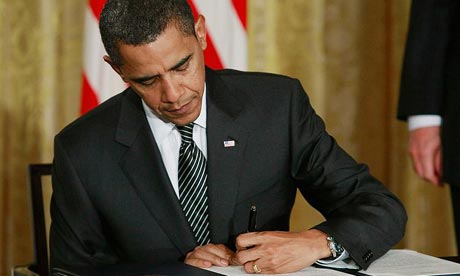
As my philosophy teacher said: Real news is what people do not want you to know. The agriculture industry and meat industry do not want you to know the details made in this movie. However, food is a health, national security, and energy issue that deserves recognition from the current Obama administration, as outlined by Michael Pollan in an article he wrote in the NY Times. (I advise you that you should definitely read this article a couple of times to set up the context of the article).
I think the San Francisco Chronicle does it best by showing these facts which "galavinzed the filmmakers":
The movie's theme is: we cannot be eating the food the way we are today.
The movie explains that our food industry (aka agri-businesses) is completely owned by a few gigantic corporations which promote efficiency and profits in a growing global food economy over the health of people. I'll give a few examples the movie shows without revealing too much.
Take corn and meat. American farms like in Iowa do not have a lot of crop diversity; Corn is heavily grown in US farms as a form of mono-culuture, or one-crop field. In terms of meat, Cattle is not grown like in the movies where cattle graze in wide grassy fields and can be made meat.
Instead, agri-businesses want to maximize profit by fattening up lots of animals with fields of corn in cramped feed lots with no room to exercise (fattening increases!). It would be a lot easier to grow cheap meat than to just leave the animal in the fields grazing and growing meat slowly, but there are health risks.
First, cattle are not used to eating corn; they eat grass, and the corn will not end up digested well. Second, given the cramped space, the cattle can unknowingly eat feces that other cattle deficate out; so in other words, you risk exposing yourself to dangerous bacteria such as eColi, and the corn helps propogate that. Chicken and pigs face similar processes as well.
(a side note not 100% directly mentioned in the movie: meat companies can put antibiotics on the cattle to survive the feedlots, which means that your body can be exposed to different hormones that may not be healthy for our bodies when you eat different meats)
When feedlots of corn are gone, the bacteria may still exist in the land, but if a farmer decides to plant on the farm, other plants (i.e. spinach and tomatoes) can be exposed to harmful pathogens.
With greater growth in cheap corn (i.e. with the advent of fertilizers and pesticides), fast food companies buy this meat that was once cattle fed by corn under unhealthy conditions. The federal government gives especially subsidizes corn farms, but we are basically subsidizing fast food. The movie gives a good point: it is cheaper to buy fast food (i.e. a dollar menu at McDonalds) than to purchase fruits and vegetables at a grocery store. Government subsidies help keep corn costs down for fast food, but not for these basic healthy foods. No wonder many working-class people and minorities can easily get fast food and face health-risks more than upper-class Americans. Yet, all giant food companies care about is profit.
Since we can grow corn extremely cheaply, we now have the advent of high frutose corn syrup, which is prevalent among sodas (i.e. go to Mickey D's and get a soda) and a lot of other sweets. Not healthy for us.
Energy is a part of this problem as well. Given we need fertilizer (relying on natural gas) to give nutrients to mono-cultured corn, and pesticides (from fossil fuels) to make sure bugs who love the fertilizer don't take over the corn, our current way of eating is not sustainable. Since we have giant food corporations, you are aware that most of your food from the grocery store is not local, and truckers rely on a dwindling supply of gasoline to transport that food, from lets say, out of state or out of the country.
Government policies help keep this process alive; these giant food companies lobby extensively to make sure they can continue doing what they want. Even our government officials (i.e. former FDA chief during Bush Adminstration, or Department of Agriculture chief of staff) were once part of the food industry. Why isn't the FDA doing anything to stop this? This movie addresses these problems.
I should stop from here and let you watch the movie for yourself. The way we eat is not sustainable for our world, and poses health risks (i.e. diabetes), especially for those who cannot afford healthy food (or do not have time to cook due to busy work schedules) and have to rely on fast food for their meals. For those who can afford healthy food, it's difficult to find the meat that would actually be likely not contaminated, since a few global food companies control most of the meat, according to the above described industrial processes. It definitely is a daunting task to challenge government policy when government officals seem to be defending the food industry (and subsides for corn which feed these animals improperly) more than the health of the people.
I recommend this movie to everybody, regardless of degree / field, because this movie teaches future generations to question the origin of how our food is made so that we can demand real, healthy food.
I'm speaking to a mostly college-aged group, but all fields (engineering, i.e. industrial engineering, bioengineering, chemical engineering), public policy related fields, health fields, business fields, environmental groups, etc. have to do something about this problem, because this is our generation, and we have to think about what we can do to solve the problem. As consumers, we can choose what foods to eat (i.e. local/non-local, organic, etc.) to help mitigate the issue, but with these diverse fields and education, we have to go beyond the "powerless consumer level".
Some more info:
Trailer:
Michael Pollan: The Food Issue - Chef In Chief
With a tone quite similar to Upton Sinclair's The Jungle, Food Inc., a documentary directed by Robert Kenner and narrated by Eric Scholsser (who wrote Fast Food Nation) and Michael Pollan (who wrote The Omnivore's Dilemma), seeks to challenge the way we currently eat based on where your food comes from and how your food is produced. The movie is currently playing in released theaters, but as the weeks go by, more theaters will play this movie.
As my philosophy teacher said: Real news is what people do not want you to know. The agriculture industry and meat industry do not want you to know the details made in this movie. However, food is a health, national security, and energy issue that deserves recognition from the current Obama administration, as outlined by Michael Pollan in an article he wrote in the NY Times. (I advise you that you should definitely read this article a couple of times to set up the context of the article).
I think the San Francisco Chronicle does it best by showing these facts which "galavinzed the filmmakers":
-- In 1972, the Food and Drug Administration conducted 50,000 food safety inspections; in 2006, the FDA conducted 9,164.
-- During the George W. Bush administration, the head of the FDA was the former executive vice president of the National Food Processors Association, and the chief of staff at the U.S. Department of Agriculture was the former chief lobbyist for the beef industry in Washington.
-- Cattle are given feed that their bodies are not designed to digest, resulting in new strains of the E. coli virus that sicken tens of thousands of Americans annually.
-- One in 3 Americans born after 2000 will contract early-onset diabetes; among minorities, the rate will be 1 in 2.
Given these facts, one would have to wonder: what's up with our food?The movie's theme is: we cannot be eating the food the way we are today.
The movie explains that our food industry (aka agri-businesses) is completely owned by a few gigantic corporations which promote efficiency and profits in a growing global food economy over the health of people. I'll give a few examples the movie shows without revealing too much.
Take corn and meat. American farms like in Iowa do not have a lot of crop diversity; Corn is heavily grown in US farms as a form of mono-culuture, or one-crop field. In terms of meat, Cattle is not grown like in the movies where cattle graze in wide grassy fields and can be made meat.
Instead, agri-businesses want to maximize profit by fattening up lots of animals with fields of corn in cramped feed lots with no room to exercise (fattening increases!). It would be a lot easier to grow cheap meat than to just leave the animal in the fields grazing and growing meat slowly, but there are health risks.
First, cattle are not used to eating corn; they eat grass, and the corn will not end up digested well. Second, given the cramped space, the cattle can unknowingly eat feces that other cattle deficate out; so in other words, you risk exposing yourself to dangerous bacteria such as eColi, and the corn helps propogate that. Chicken and pigs face similar processes as well.
(a side note not 100% directly mentioned in the movie: meat companies can put antibiotics on the cattle to survive the feedlots, which means that your body can be exposed to different hormones that may not be healthy for our bodies when you eat different meats)
When feedlots of corn are gone, the bacteria may still exist in the land, but if a farmer decides to plant on the farm, other plants (i.e. spinach and tomatoes) can be exposed to harmful pathogens.
With greater growth in cheap corn (i.e. with the advent of fertilizers and pesticides), fast food companies buy this meat that was once cattle fed by corn under unhealthy conditions. The federal government gives especially subsidizes corn farms, but we are basically subsidizing fast food. The movie gives a good point: it is cheaper to buy fast food (i.e. a dollar menu at McDonalds) than to purchase fruits and vegetables at a grocery store. Government subsidies help keep corn costs down for fast food, but not for these basic healthy foods. No wonder many working-class people and minorities can easily get fast food and face health-risks more than upper-class Americans. Yet, all giant food companies care about is profit.
Since we can grow corn extremely cheaply, we now have the advent of high frutose corn syrup, which is prevalent among sodas (i.e. go to Mickey D's and get a soda) and a lot of other sweets. Not healthy for us.
Energy is a part of this problem as well. Given we need fertilizer (relying on natural gas) to give nutrients to mono-cultured corn, and pesticides (from fossil fuels) to make sure bugs who love the fertilizer don't take over the corn, our current way of eating is not sustainable. Since we have giant food corporations, you are aware that most of your food from the grocery store is not local, and truckers rely on a dwindling supply of gasoline to transport that food, from lets say, out of state or out of the country.
Government policies help keep this process alive; these giant food companies lobby extensively to make sure they can continue doing what they want. Even our government officials (i.e. former FDA chief during Bush Adminstration, or Department of Agriculture chief of staff) were once part of the food industry. Why isn't the FDA doing anything to stop this? This movie addresses these problems.
I should stop from here and let you watch the movie for yourself. The way we eat is not sustainable for our world, and poses health risks (i.e. diabetes), especially for those who cannot afford healthy food (or do not have time to cook due to busy work schedules) and have to rely on fast food for their meals. For those who can afford healthy food, it's difficult to find the meat that would actually be likely not contaminated, since a few global food companies control most of the meat, according to the above described industrial processes. It definitely is a daunting task to challenge government policy when government officals seem to be defending the food industry (and subsides for corn which feed these animals improperly) more than the health of the people.
I recommend this movie to everybody, regardless of degree / field, because this movie teaches future generations to question the origin of how our food is made so that we can demand real, healthy food.
I'm speaking to a mostly college-aged group, but all fields (engineering, i.e. industrial engineering, bioengineering, chemical engineering), public policy related fields, health fields, business fields, environmental groups, etc. have to do something about this problem, because this is our generation, and we have to think about what we can do to solve the problem. As consumers, we can choose what foods to eat (i.e. local/non-local, organic, etc.) to help mitigate the issue, but with these diverse fields and education, we have to go beyond the "powerless consumer level".
Some more info:
Trailer:
Michael Pollan: The Food Issue - Chef In Chief